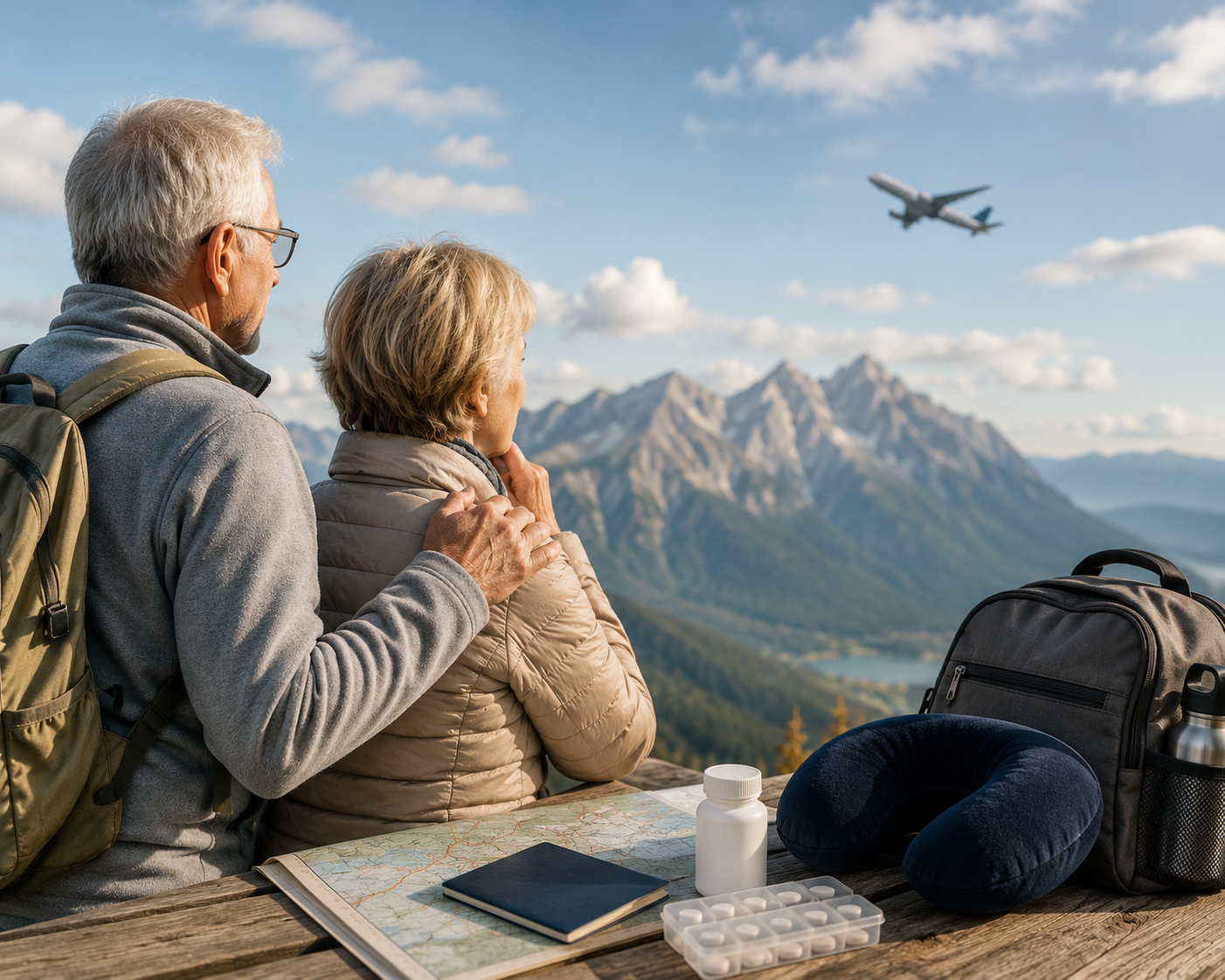
Families often plan vacations hoping for rest, connection, and a change of scenery. But if you or your loved one is living with cognitive impairment or dementia, there’s a key factor that can make or break the trip: altitude.
Most people think altitude only matters for athletes or mountain climbers. In reality, it causes far more symptoms in people with cognitive impairment than in the general population—something I see often in my practice here in Santa Fe, New Mexico (7,000 ft elevation).
Altitude 101: What Counts as “High Enough” to Cause Symptoms?
Altitude simply means how high you are above sea level. Here’s an easy way to picture it, using familiar cities:
- 0 ft (Sea level) Examples: New York City, Miami, Los Angeles
- 3,000–5,000 ft (Mild altitude) Examples: El Paso, TX (~3,740 ft), Sedona, AZ (~4,350 ft), Reno, NV (~4,500 ft), Salt Lake City, UT (~4,200 ft)
- 5,000–8,000 ft (Moderate altitude) Examples: Albuquerque, NM (~5,312 ft), Denver, CO (5,280 ft), Colorado Springs, CO (~6,000 ft), Flagstaff, AZ (7,000 ft), Santa Fe, NM (7,000+ ft)
- 8,000+ ft (High altitude) Examples: Breckenridge, CO (9,600 ft), Taos Ski Valley, NM (9,200 ft), many ski areas in Utah and Colorado
Most healthy travelers living at sea level start noticing symptoms—headache, fatigue, shortness of breath—around 6,000–8,000 ft. People with cognitive impairment are often affected at lower elevation and in my experience, have more brain related symptoms than the average traveler.
Why Altitude Hits the Brain Harder in Cognitive Impairment
1. The Brain Gets Less Oxygen
As altitude increases, the air gets thinner—meaning there’s less oxygen in every breath. This reduces the amount of oxygen reaching the brain, which can quickly affect thinking and behavior. Even small drops in oxygen can cause:
- More confusion
- Slower thinking
- Trouble focusing
- Worsening memory
- Irritability or behavior changes
These changes can show up even at “low elevations” that many people consider “mild.”
2. Nighttime Breathing Problems Are Common—and Altitude Makes Them Worse
Many people with cognitive impairment also have sleeprelated breathing issues, diagnosed or not. These may include:
- Loud snoring
- Very long pauses in between breaths (apnea)
- Unrefreshing sleep
- Low oxygen levels at night
At altitude, nighttime oxygen levels drop even further. This can lead to:
- More daytime fatigue: mental and/or physical
- Lower stamina: can’t walk as far or exercise as much as at sea level
- Poor concentration
- Irritability
- Higher risk of “sundowning” (evening confusion)
If sleep is already fragile at home, altitude can make it significantly worse.
Who Should Think Twice About Traveling to Altitude?
Some people are more likely to struggle. These scenarios should prompt extra caution, especially if someone is already “tenuous” or not super stable at home:
- Limited exercise capacity or they fatigue easily
- Breathing issues at rest or walking around the house
- Evening confusion or unusual behavior (“sundowning”) is the norm
- Untreated or suspected sleep apnea (snoring, pauses in breathing, unrefreshing sleep)
- Home oxygen saturation averages under 93% on a pulse oximeter
If someone is already functioning at the edge of their reserve at home, altitude can overwhelm their system quickly. If you or your loved one is experiencing any of these scenarios, and you are still in the planning phase of a trip, you may want to reconsider high altitude destinations. If changing your plans is not an option, then the next best thing is to be proactive and prepared.
If You Decide to Go: Practical Steps to Reduce Altitude Stress
You can’t change the altitude, but you can make the transition easier.
1. Plan Time to Acclimatize
- Drive when possible, to allow for a gradual adjustment.
- Plan stopovers at lower elevations before reaching your destination.
- Keep the first 1–2 days very light—no packed schedules or strenuous activity.
2. Stay Well Hydrated and Use Electrolytes
Unless you have a medical reason not to such as heart failure, kidney or liver disease and be sure to check with your clinician before using any electrolyte powders.
Altitude dehydrates you faster. Hydration supports better oxygen delivery and overall energy and resilience.
3. Avoid Alcohol and Sedatives
Both slow breathing and worsen nighttime oxygen drops. Alcohol also dehydrates you.
4. Other Helpful Strategies
- Light daytime activity
- Avoid heavy meals late at night
- Use a pulse oximeter to spot early oxygen drops
In Summary
Altitude matters—especially for people with cognitive impairment or dementia. Living and practicing medicine at 7,000 feet in Santa Fe, I see firsthand how even moderate elevation changes can worsen thinking, behavior, sleep, and energy. With proactive planning, realistic expectations, and a slower pace, you can make travel safer and more enjoyable for everyone involved.
Save Your Seat for the Beyond Airplane Mode Summit
I’m thrilled to be a featured speaker in the Beyond Airplane Mode Summit: Traveling Well in a Wireless World, airing May 12–14.
In my interview, I go deeper into travel health, altitude, sleep, and simple steps that protect your brain and body while traveling.
Everyone who registers gets my brand‑new free guide:
📘 The Traveler’s Health Playbook: 10 Mistakes You Don’t Need to Make
It’s a practical, easy‑to‑use resource you can take on any trip.
👉 Register for the summit here and get your free download.